
Why your child is terrified of shots — and why it’s not your fault
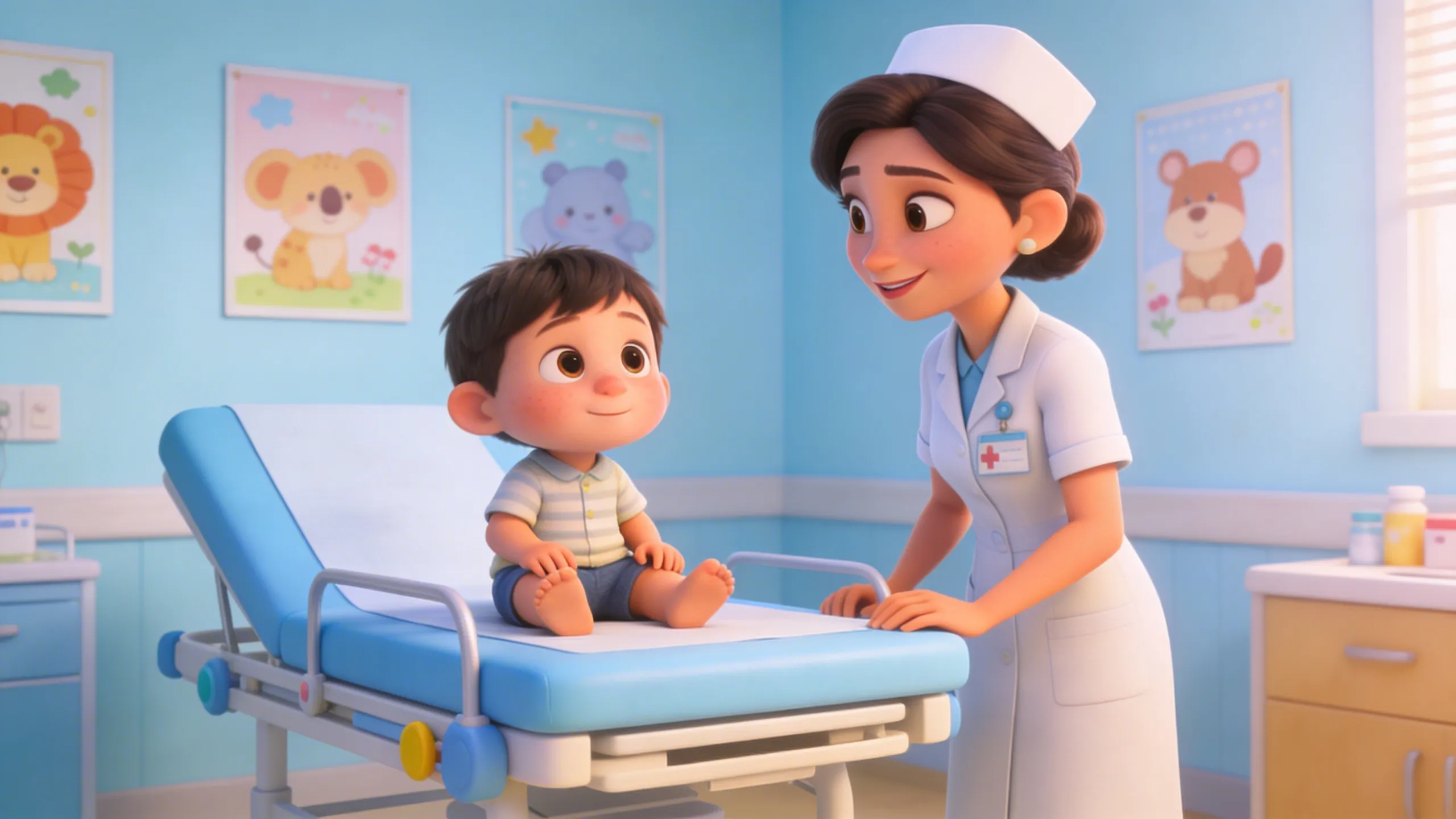
If your child has ever melted down at the mere mention of a vaccine appointment, you already know the helpless feeling that comes with it. The bribes, the bargaining, the promises of ice cream and screen time. And then — despite all of it — the tears. The screaming. The grip on your shirt.
Here’s something important: you are not failing your child. You are fighting a biological response that has been hardwired into the human brain for thousands of years. And understanding it is the first step to changing it.
The brain science behind needle fear
When your child sees a syringe, their amygdala — the brain’s fear center — fires before the rational part of their brain has any chance to respond. This isn’t a choice. It isn’t weakness. It’s a threat-detection system doing exactly what it was designed to do.
Dr. Anna Taddio, a leading researcher in pediatric pain management at the University of Toronto, has spent decades studying needle fear in children. Her research confirms that the fear response is real, measurable, and physiological — not performative.
63%
of children report significant fear before vaccination appointments
25%
of adults still experience clinically significant needle phobia
7%
of people avoid medical care entirely because of needle fear
That last number matters. Needle fear isn’t just a bad afternoon. For a meaningful percentage of children, early negative injection experiences contribute to a lasting avoidance of medical care that follows them into adulthood.
Why some children are more afraid than others
Needle fear isn’t randomly distributed. Research identifies several factors that significantly increase a child’s likelihood of developing injection anxiety:
- Previous painful experiences. The first shot a child receives sets a template. If it’s associated with fear and pain rather than comfort and reward, every subsequent appointment begins with that template already loaded.
- Parental anxiety. Children are extraordinarily sensitive to their parents’ emotional state. Studies show that parental anxiety before and during an injection procedure measurably increases the child’s pain response — even when parents believe they’re hiding it.
- Anticipatory anxiety. The fear often begins days or even weeks before the appointment. Telling a child too far in advance — or using language that emphasizes pain — activates the threat response long before the needle is anywhere near them.
- Loss of control. Children who feel they have no agency in a situation experience heightened fear responses. Procedures where things are simply done to them, without explanation or choice, are consistently more distressing.
- Sensory sensitivity. Some children have genuinely lower pain thresholds or higher sensory sensitivity. This is neurological, not behavioral, and it deserves to be treated accordingly.
What actually works
Decades of pediatric pain research have converged on three core mechanisms that reliably reduce fear and pain during injection procedures:
- Distraction. Active, engaging distraction — particularly visual and cognitive — during the procedure measurably reduces both pain perception and behavioral distress. The child’s brain cannot be fully focused on both fear and curiosity simultaneously.
- Reward. A concrete, positive reward immediately following the procedure begins to rewrite the template. The brain’s associative memory is powerful. A small toy the child gets to keep doesn’t just make them feel better in the moment — it begins changing what they expect next time.
- Parental calm. A composed, confident, warm caregiver is one of the most effective pain management tools in pediatric care. It’s free, available to everyone, and backed by extensive research.
MedBuddy® was designed around all three. The figurine serves as distraction during the procedure, disguises the syringe to reduce the visual threat response, and becomes a take-home reward the child keeps afterward. It is distraction therapy made tangible.