
What McDonald’s figured out 50 years ago that could change your child’s next appointment
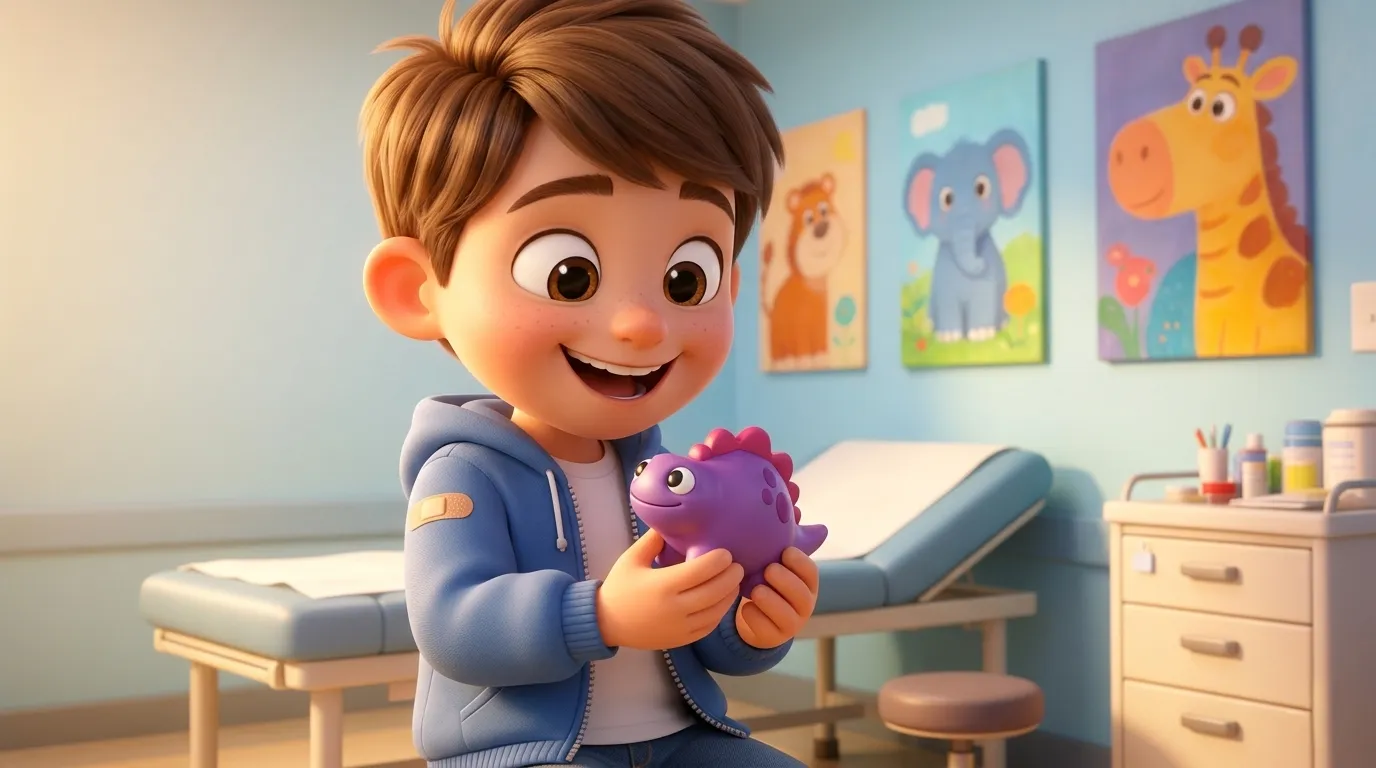
In 1979, McDonald’s launched the Happy Meal. The concept was deceptively simple: take something children find ordinary or mildly unpleasant (eating lunch), package it with a toy, and transform the emotional experience of the whole thing.
The result wasn’t just a successful product. It was a masterclass in behavioral psychology — specifically, in how immediate positive rewards reshape associative memory.
The psychology of the Happy Meal
The Happy Meal works because of a well-documented principle in behavioral science: when a neutral or mildly aversive experience is paired consistently with a positive reward, the emotional valence of the experience changes. The anticipatory anxiety reduces. The associated memory becomes more positive. The behavior becomes easier to repeat.
Children don’t just enjoy the Happy Meal. Over time, they look forward to it. The toy is not decoration. It is the mechanism.
Why this matters for pediatric medicine
Consider the structural parallel. A child arrives at a clinic for an injection. The experience is mildly aversive at best, terrifying at worst. There is no reward. There is no transformation of the experience. There is just the procedure, followed by a bandage and the hope that everyone gets out of the room quickly.
And then we wonder why the next appointment starts with anxiety already fully loaded.
177 years after the first hypodermic syringe, the protocol for administering injections to children was essentially unchanged: hold still, it’ll be quick, you’re brave. No distraction. No disguise. No reward.
177
years without a meaningful change to how children experience injections
1B+
injections administered to children annually worldwide
The MedBuddy® solution
MedBuddy® is the Happy Meal principle applied to pediatric injection care. A small figurine attaches to the syringe. The child engages with it during the procedure as active distraction. The syringe is hidden beneath a familiar, friendly shape. And when it’s done, the figurine is theirs to keep.
The toy is not a consolation. It is the mechanism. It is how you begin to change what a child anticipates when they hear the word “appointment.”
Over time — just as McDonald’s trained a generation of children to ask for the drive-through — MedBuddy® begins building a new associative template: injection → toy → positive memory. The procedure doesn’t disappear. It becomes something that ends with something good.
Why the healthcare industry is paying attention
Beyond the individual child, there are systemic benefits. Children who are less distressed during procedures are easier to manage. Procedures are faster and require less staff effort. Compliance with vaccination schedules improves when children — and parents — have less dread about appointments.
The STREAM Research Study documented these outcomes across multiple clinical settings. The nurses, pharmacists, and physician assistants involved didn’t just report that children were calmer. They reported that their own experience of administering the injection was better.
McDonald’s changed how a generation experienced lunch. MedBuddy® is changing how a generation experiences healthcare.